火影忍者
TCM used to treat patients on flights_我的网站

一 | A recent in-flight medical emergency highlighted how traditional Chinese medicine techniques can complement emergency care in unexpected settings. Four faculty members from the Beijing University of Chinese Medicine responded to a medical emergency aboard an overnight Air China flight from Paris to Beijing, using a combination of conventional assessments and TCM therapies to help an 11-year-old passenger whose condition later stabilized. At about 3 am Beijing time on July 20, cabin crew issued an urgent call for medical assistance after the Chinese girl, who was returning from a performance in France, developed chest pain, alarming her family. Four BUCM faculty members immediately came forward: Wang Ting, the university's vice-president; An Chao, deputy director of the International Cooperation Department; Chen Younan, associate dean of the School of Acupuncture-Moxibustion Tuina; and Zheng Fengjie, dean of the School of Traditional Chinese Medicine. After checking the girl's blood pressure, body temperature and heart rate, they identified persistent pain in the chest area as her primary symptom. The team administered oxygen and placed a TCM pill under the girl's tongue to promote blood circulation and relieve pain. They also applied acupressure and massage techniques, focusing on several acupoints including Neiguan, located on the inner forearm about two to three finger widths above the wrist crease, between the tendons of the palmaris longus and flexor carpi radialis muscles. According to TCM theory, stimulating the Neiguan acupoint is believed to help regulate heart function, calm the mind and relieve chest discomfort. Working in the cramped cabin, the four physicians took turns kneeling beside the girl while monitoring her condition. Her chest pain gradually subsided. After the aircraft landed in Beijing, the crew arranged for ground medical personnel to continue her treatment. Later reports revealed that her condition had stabilized. Wang said the emergency response demonstrated that TCM can play a role in certain acute situations when used alongside standard medical assessments. "The treatment combined sublingual administration of a traditional Chinese medicine pill with acupressure techniques," he said. "Together, they helped relieve the child's symptoms by promoting blood circulation and easing the chest pain." He added that many people associate TCM mainly with chronic disease management and health maintenance, while overlooking its potential applications in emergency situations. "Herbal medicine, acupuncture and tuina are not limited to long-term care," Wang said. "We hope more people, both in China and abroad, will gain a better understanding of the role traditional Chinese medicine can play in emergency care." The July incident was not the first time faculty members and students from BUCM provided medical assistance aboard flights. On June 28, 2024, doctoral student Cao Feng used acupuncture to help revive a woman who had lost consciousness aboard a flight from Beijing to Lanzhou in Gansu province. And on Oct 9, 2024, student Gao Yingjun administered acupressure to assist a Russian passenger suspected of having a stroke on a flight from the Maldives to Shanghai. More recently, on Jan 1 this year, doctoral student Yang Yao used acupuncture on the Neiguan acupoint to help treat a passenger experiencing a hypertensive emergency aboard a China Eastern Airlines flight. For the university, these incidents illustrate how medical professionals trained in TCM can contribute when emergencies arise unexpectedly, even thousands of meters above the ground. 
 。
。
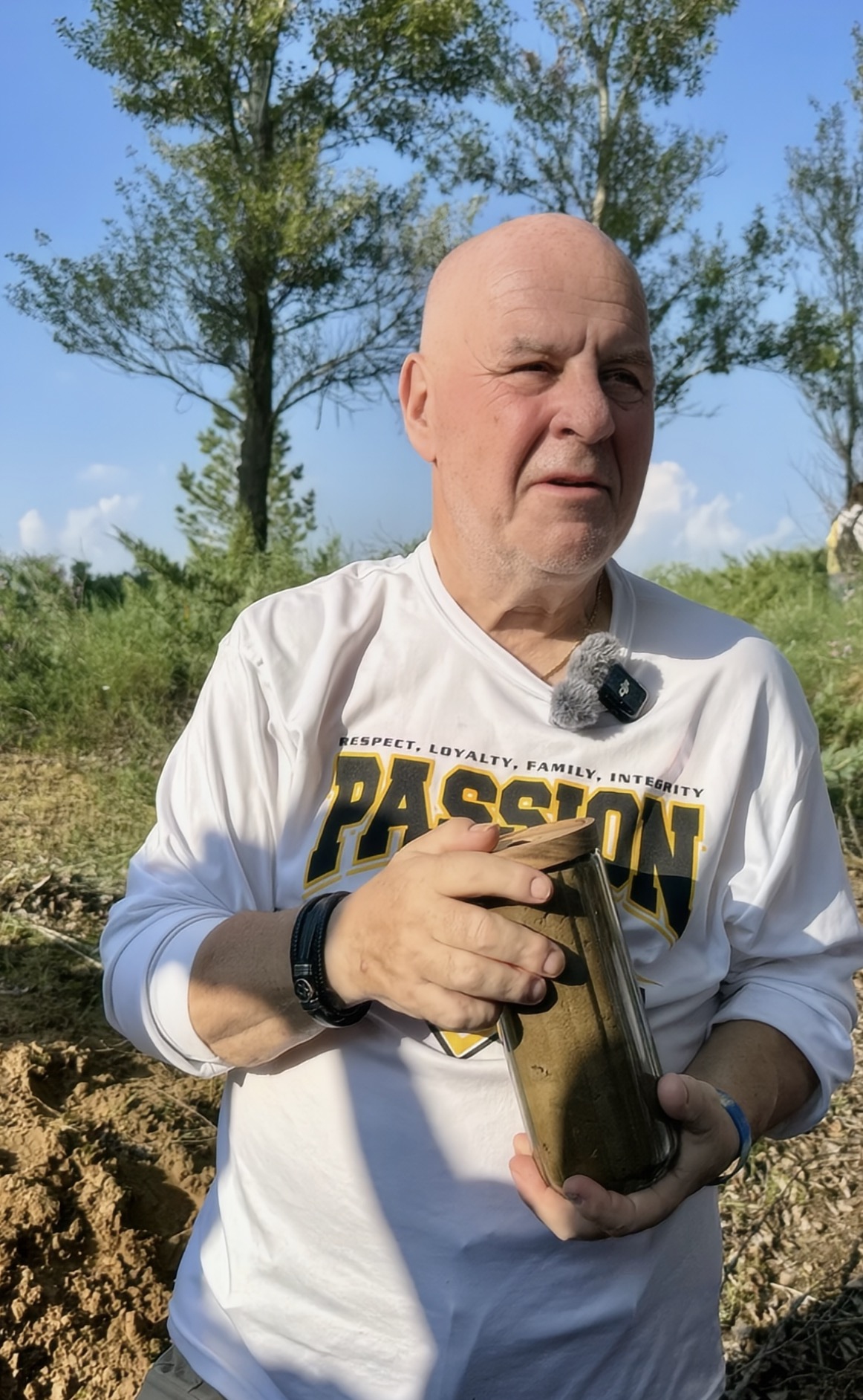
Ronald Sakolsky fills a jar with sand from the Mu Us Desert in Inner Mongolia, planning to bring it back to the US, on August 24, 2026. Photo: Lin Xiaoyi
On Monday afternoon, Ronald Sakolsky, an American teacher, set foot once again on the soil of the Mu Us Desert, in the Uxin Banner of Ordos, North China’s Inner Mongolia Autonomous Region. He first came here in 2000. Back then, the land was little more than drifting sand. Today, it is green with trees – a transformation driven by decades of local effort.
He stood within Sakolsky Forest, a woodland formally named to honor his early donation toward local ecological restoration. There, he carried out a plan he had held long before this trip: filling a jar with sand from the desert to bring home to the US.
More than two decades ago, sand was the one thing this place had in abundance. In 1999, when Sakolsky arrived in China as a participant in a bilateral teacher exchange program, he was moved by the tireless efforts of Chinese desert fighter Yin Yuzhen and her husband to curb desertification in the Mu Us Desert. He raised $5,000 – equivalent in 1999 to three years of income for Yin’s entire family – to fund their local tree-planting initiative.
The young saplings bought with that donation have since matured into more than 50,000 full-grown trees, transforming the once desolate, sandy wasteland into a thriving green landscape.
When Sakolsky met Yin at the airport on Sunday, 26 years after his first visit to Inner Mongolia, he joked that he could not take a tree from the Mu Us Desert, but he could slip some sand into his shoes and carry a piece of the land back with him. Now, he had found exactly the sand he wanted – not just any sand, but from a place where persistence had turned desert into life, and where his own name had become part of that story.
“Promise is a promise,” he said. “Ms. Yin made a promise, and she fulfilled it.”
For Sakolsky, the sand is not just dirt. It is a metaphor, a bridge, a shared ground. He plans to tell his grandchildren what it means. “It’s not just a piece of sand in the jar,” he said. “It’s a jar of love.”
He used the jar of sand to symbolize that America and China share a relationship rooted in the same soil. He shook the jar, holding its two ends as if they were the two countries, and said that it shows we’re all on the same planet.
There is an old American joke, he noted, that if you dig a hole deep enough, you will eventually reach China. “We’re all on the same planet,” he said.
Earlier that day, while visiting Yin’s home, he spoke about the need for Americans and Chinese to see each other as family. “All Americans should understand that Chinese people and Americans can be family,” he said. “We can transcend differences if we focus on our common ground. We all love our countries, and we all value loyalty and respect – these are the shared virtues we hold dear.”
As for the sand he collected, Sakolsky said he would treat it as a treasure, alongside all his other precious keepsakes from China. He expects to display it in his living room – a daily reminder of the forest that carries his name and the people who made it grow.
。
Current article:http://38wx8.ruwentaqintiaozhupapaigai.shop/exibv5v/20260826/3931.html
Published on:06:50:29


 。
。